The staging industry will tell you staging sells homes faster and for more money. That is broadly true for retail MLS listings. It is completely irrelevant for cash sales. The question of empty versus staged is really a question of who you are selling to.
Get that decision right first, then decide whether staging makes financial sense.
What staged homes actually do better on the MLS
For buyers using an agent, browsing Zillow or Realtor.com, and planning to move in, staging accomplishes two things:
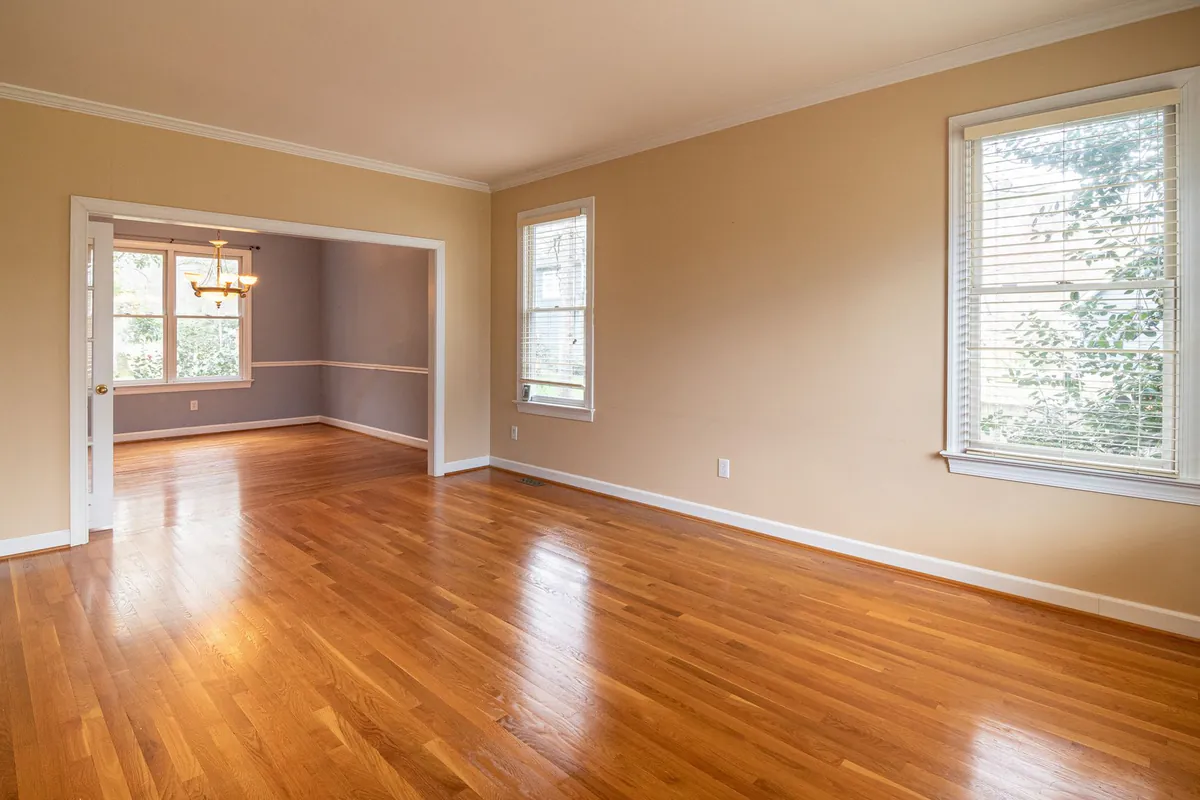
Better photos. Most buyers start online. A staged room photographs larger, brighter, and more inviting than an empty one. Wider angle lenses help, but furniture gives the eye something to anchor to and creates a sense of scale. An empty bedroom looks like a smaller bedroom in photos.
Easier visualization. Buyers walking through an empty home struggle to mentally furnish it and imagine living there. A staged home does that work for them, which shortens the evaluation time and reduces hesitation.
Industry research suggests staged homes spend fewer days on market and may attract offers closer to or above asking price in competitive conditions. The effect is strongest in markets where many similar homes are competing and buyers have choices.
However, the pricing benefit is often 1 to 5 percent on mid-range properties, and it diminishes on lower-priced homes, in markets with low buyer competition, or when the home needs repairs that staging cannot hide.
What staged homes do not do better
Staging does not fix a bad price. If the home is overpriced for the market, furniture will not save it.
Staging does not hide deferred maintenance. Buyers who see a beautifully staged living room and a rusted water heater in the basement are not reassured by the furniture. In some cases, a well-staged home with a rough inspection raises more suspicion than an honestly presented home sold as-is.
Staging does not help with cash buyers, investors, or any buyer whose decision is financially driven rather than emotionally driven.
The cash sale scenario: staging changes nothing
Cash home buyers make offers based on a property’s location, size, condition, and comparable sales. They factor in what repairs will cost and what the home will eventually be worth. None of those numbers change based on whether there is furniture in the living room.
A cash buyer may inspect the property or may make an offer without interior access. Either way, staging has zero effect on the outcome. Spending 2,000 to 5,000 dollars on staging before a cash sale is money you will not recover.
This is also true of the comparison between a cash offer and a traditional listing. For a full breakdown of what each path actually nets you, the cash offers versus traditional sales guide runs through the numbers including all the costs of a traditional listing.
The cost of staging vs. what you get back
| Staging approach | Typical cost | Best for |
|---|---|---|
| Professional full staging | $2,000 to $5,000 per month | High-end vacant homes, luxury listings |
| Partial staging (key rooms) | $800 to $2,000 | Mid-range vacant homes on MLS |
| Virtual staging (photos only) | $100 to $300 per photo | Budget-conscious MLS listings |
| Fresh paint and deep clean | $500 to $1,500 | Any MLS listing; not staging but helps |
| No staging | $0 | Cash sales; occupied homes that show well |
If you are listing on the MLS and the home is vacant, at minimum virtual staging on your listing photos is worth considering. Physical staging makes more sense when the home is in the higher price brackets, the market has buyer competition, and the home will sit listed for weeks or months.
When to skip staging entirely
Skip staging when:
- You are selling to a cash buyer. Not needed, full stop.
- The home needs significant repairs that buyers will discover anyway. Stage after repairing if listing; do not stage a house with a failed roof inspection.
- The market is so hot that well-priced homes sell in days regardless of presentation.
- Your listing price is aggressive enough that you expect multiple offers quickly.
- The carrying costs of holding while staging is arranged and photographed are more than the potential staging premium.
Green flags and red flags on staging advice
Green flags (advice worth taking):
- Agent recommends targeted staging in the main living area and primary bedroom only
- Cost estimate is provided upfront before you commit
- Agent can share comparable data from your specific market on staging returns
Red flags:
- Agent insists on full staging for a home you are selling to an investor
- Staging recommendation comes without any discussion of the expected return on cost
- No mention of virtual staging as a lower-cost alternative
For vacant home sellers who want the fastest path with no staging cost at all, the sell vacant house situation guide covers options specific to empty properties.
The bottom line
Staging beats empty for retail MLS buyers. The effect is real, though market-dependent and not a guarantee of a price premium. For cash buyers, staging makes no difference and wastes money.
Decide who you are selling to first. If the answer is a cash buyer, redirect that staging budget to something useful. If the answer is the open market and retail buyers, light staging or virtual staging on key rooms is worth the cost.
Request a no-obligation cash offer to find out your number from a cash buyer today, with no staging required.