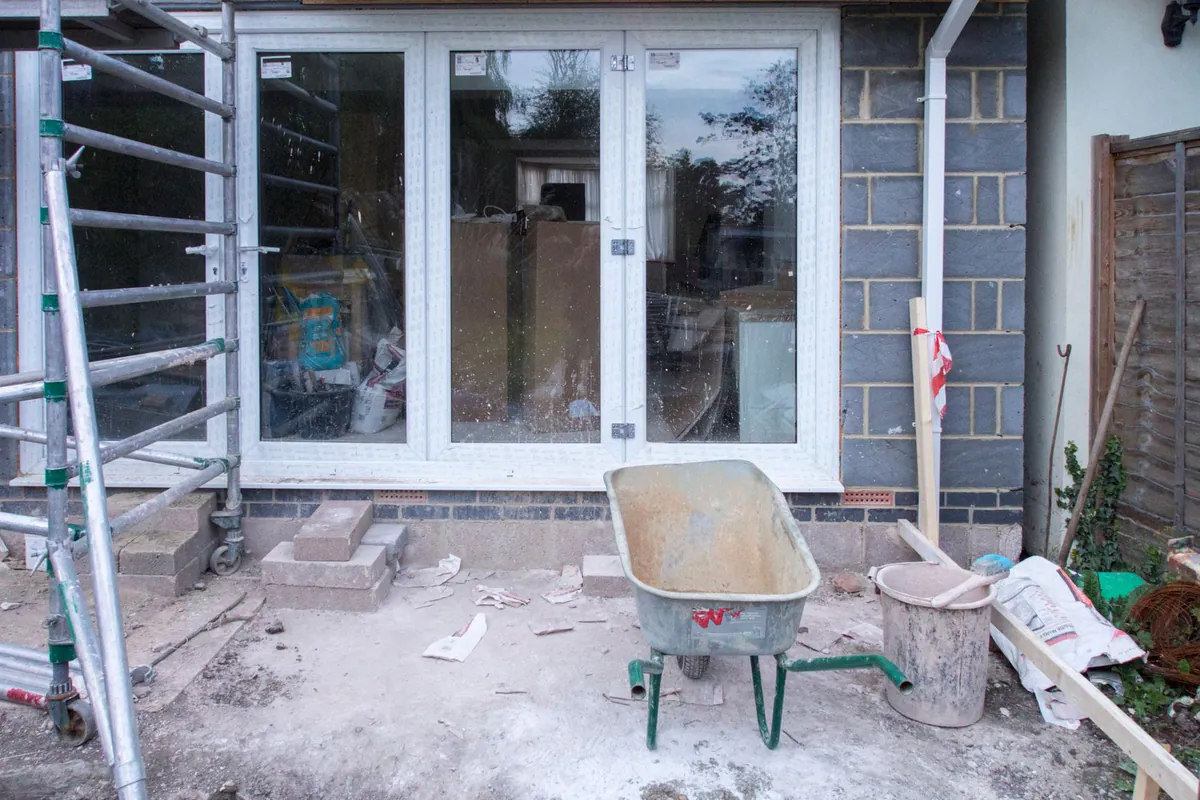
The instinct is understandable: spend money fixing the house, list it on the market, and get top dollar. That instinct is wrong for most fixer-uppers. The math does not work the way sellers expect it to once you account for what repairs actually cost, how long listing takes, and what gets deducted from the sale price before you see a dollar.
Here is an honest comparison of both paths for a home that needs significant work.
The key difference for fixer-uppers
A fixer-upper creates a specific problem for a traditional sale that does not exist for a move-in-ready home: the seller has to either fund the repairs upfront or accept the market’s discount for a home in poor condition. Either path costs money.
A cash buyer removes that problem entirely by purchasing the home in its current condition. The buyer prices in the repair costs through their offer formula. You keep the cash instead of spending it on a renovation you may not fully recover.
Side-by-side comparison for a fixer-upper
| Factor | Cash Offer | Traditional Sale (Agent) |
|---|---|---|
| Repairs before selling | None, purchased as is | Required or heavily discounted by buyers |
| Time to close after offer | 7 to 14 days | 3 to 6 months including listing, negotiation, and closing |
| Agent commission | None | 5 to 6 percent of sale price |
| Seller closing costs | Often covered by buyer | 1 to 3 percent of sale price |
| Repair credits demanded by buyer | None | Often 5 to 15 percent of purchase price for distressed homes |
| Showings | None | Repeated, often difficult to schedule for occupied or distressed homes |
| Financing fall-through risk | None | Higher than average since fixer-uppers fail appraisals more often |
| Carrying costs during the process | None | Mortgage, taxes, insurance, utilities for the full listing and closing period |
| Buyer pool | Single buyer, no contingencies | Smaller than move-in-ready homes; many buyers cannot finance fixer-uppers |
| Headline price | Lower than retail | Closer to retail if repaired, lower if listed as is |
The buyer pool line matters. Most conventional mortgages require the home to meet minimum property standards. A fixer-upper with deferred maintenance, roof issues, or foundation problems will not qualify for standard financing, which shrinks your buyer pool to investors and cash buyers anyway, the same buyers who would make a cash offer directly.
Net proceeds: the real comparison for a fixer-upper
Here is a worked example using a home with a retail after-repair value of 280,000 dollars that currently needs approximately 35,000 dollars in repairs.
Option 1: Repair the home and list it
- Repair costs paid by seller: minus 35,000 dollars
- Gross list price after repairs: 280,000 dollars
- Agent commission at 5.5 percent: minus 15,400 dollars
- Seller closing costs at 2 percent: minus 5,600 dollars
- Carrying costs during repairs and listing (4 to 6 months): minus 8,000 to 12,000 dollars
- Estimated seller net: 227,000 to 231,000 dollars
Option 2: List as is without repairs
- Buyer discounts the price for condition: list realistically at 235,000 to 245,000 dollars
- Agent commission at 5.5 percent: minus 13,000 to 13,500 dollars
- Seller closing costs at 2 percent: minus 4,700 to 4,900 dollars
- Repair credits demanded by financed buyers during inspection: minus 10,000 to 20,000 dollars (if you can find a willing lender)
- Carrying costs during extended market time: minus 6,000 to 10,000 dollars
- Estimated seller net: 196,000 to 211,000 dollars (and many deals still fall through)
Option 3: Sell for cash as is
- Cash offer (approximately 78 percent of ARV after costs): 218,000 dollars
- Seller closing costs: zero
- Repairs: zero
- Carrying costs: zero
- Estimated seller net: 218,000 dollars in 7 to 14 days
In this example, a cash sale produces a better net than listing as is and a comparable or slightly lower net than a repaired listing, but without the 35,000-dollar repair outlay, the months of carrying costs, or the project management burden.
The decision shifts further toward cash as repair costs increase, as the local market softens, or as the seller’s timeline tightens.
For a broader look at how costs compare across both paths, the cash offers versus traditional sales breakdown covers each factor in detail.
The renovation gamble: why repairs rarely pay full return on fixer-uppers
Sellers who renovate before listing are betting that every dollar spent on repairs returns more than a dollar in sale price. That bet rarely pays off fully, and for major repairs it almost never does.
Kitchen renovations, bathroom overhauls, and structural work are the most expensive categories and also the least likely to return their full cost. Buyers have their own taste and often pay for cosmetic updates in their offer price without returning 100 cents on every dollar the seller spent.
Cosmetic fixes, paint, landscaping, and cleaning, tend to return better but do not move the needle much for a home with significant deferred maintenance.
The exception is work that a buyer’s lender would require to approve a loan. Roof failures, plumbing defects, and electrical hazards may need to be corrected if you want to sell to financed buyers. If you are selling a home as is for cash, none of that applies.
When repairing before listing does make sense
For a fixer-upper, committing to repairs before listing is worth considering when:
- The needed repairs are cosmetic only and cost under 10,000 dollars total
- You have the cash to fund repairs with no debt and no carrying cost pressure
- The local market is very strong and buyers are competing for inventory in your price range
- You have a trusted contractor who can complete the work quickly and on budget
- A professional appraisal confirms the repair spend will be recovered in the list price
When any of those conditions do not hold, repairing before listing adds risk without a reliable return.
Green flags: a legitimate cash offer on a fixer-upper
- The buyer explains the after-repair value and points to comparable sales
- The repair estimate is specific, not a blanket “we deduct 20 percent”
- You receive the written offer with no pressure to sign immediately
- The buyer can show evidence of prior closed purchases in your area
- No money is ever requested from you before or during closing
Red flags: a lowball disguised as a cash offer
- No explanation of how the price was calculated
- An offer that is 40 to 50 percent below any reasonable after-repair value
- Pressure to sign within hours
- A price that renegotiates downward after the inspection during “due diligence”
- Any upfront fee charged to the seller
What to do before choosing a path
- Get an honest repair estimate from at least one licensed contractor before you commit to anything.
- Pull recent comparable sales for similar homes in good condition in your neighborhood. That is your ARV anchor.
- Get two to three cash offers. Comparing offers tells you whether the number you received is competitive.
- Calculate your true net on the repair-and-list path using realistic repair costs, carrying costs, and commission.
- Compare the two net figures, not the two headline prices.
If you want to explore selling a home that needs repairs without doing any work first, that page walks through what the as-is process looks like in practice.
The bottom line
For most fixer-uppers, selling for cash nets more money than listing once you account for the full cost of repairs, the agent commission, the months of carrying costs, and the risk that a financed buyer’s deal falls through. The cash offer discount looks large in the headline. It looks much smaller when you put it next to the repair bill you would otherwise write.
Run both sets of numbers before you commit to a path. Request a no-obligation cash offer from HomeWise to get a real number for your home in its current condition. You can compare it to a realistic traditional sale net with full information and no pressure.